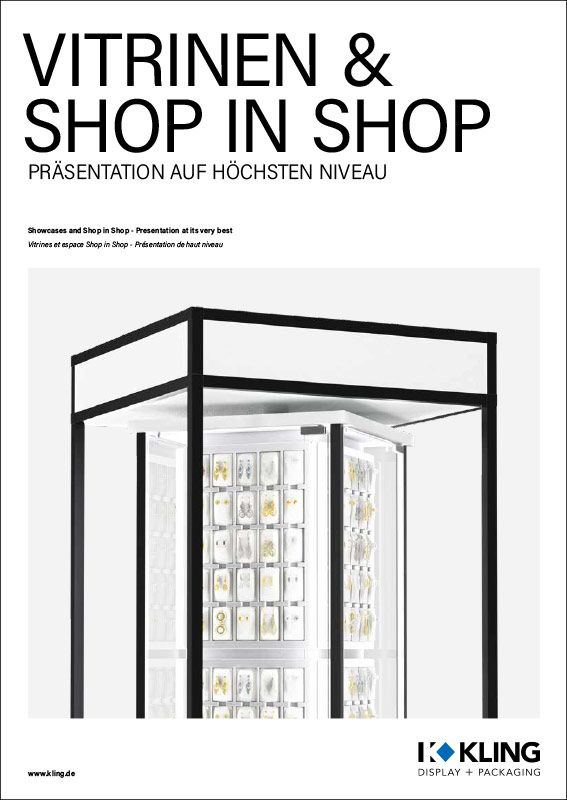
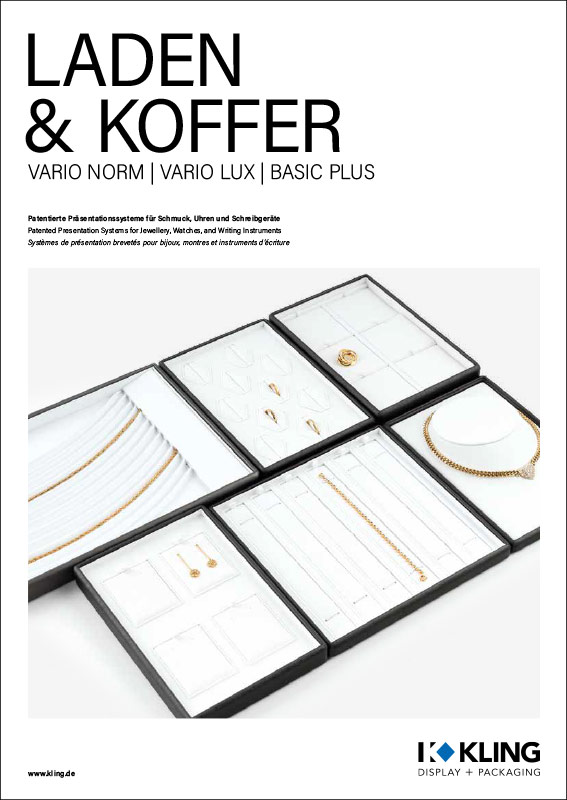
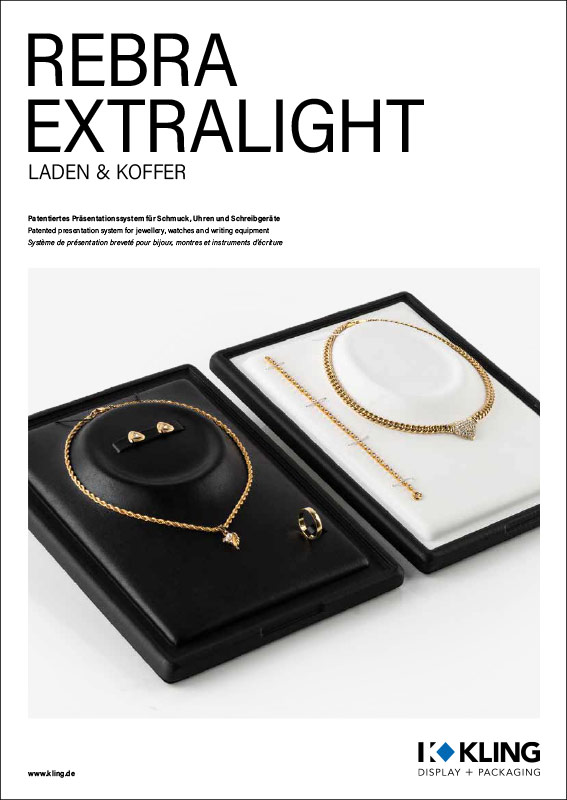
A POS display provides an entirely individual stage for unique products. It offers the brand manufacturer a decisive oppotunity to differentiate himself at the Point of Sale. Displays create small, independent worlds of experience in the sense of the corporate culture and support the branding. The display's design and functionality are inseparable. Together with our customers, we develop displays that unmistakeably reflect the character of the brand. Whether the displays are made of acrylic, precious woods or vacuum-shaped plastic. With a high-gloss finish, covered with faux leather or with an integrated photo motif.
There are hardly any limits to the creative possibilities. Kling creates displays for all kinds of industries and out of all kinds of materials, including mixed materials. The display development and manufacture takes place at the Birkenfeld site – 100% Made in Germany. On customer demand we also can manufacture the displays through our partner trade organisation in Hongkong.
Besides the development and manufacturing of individual displays we offer some display standard models, which you can see in the following.
Standard Displays
Individual branding and adjustments on request
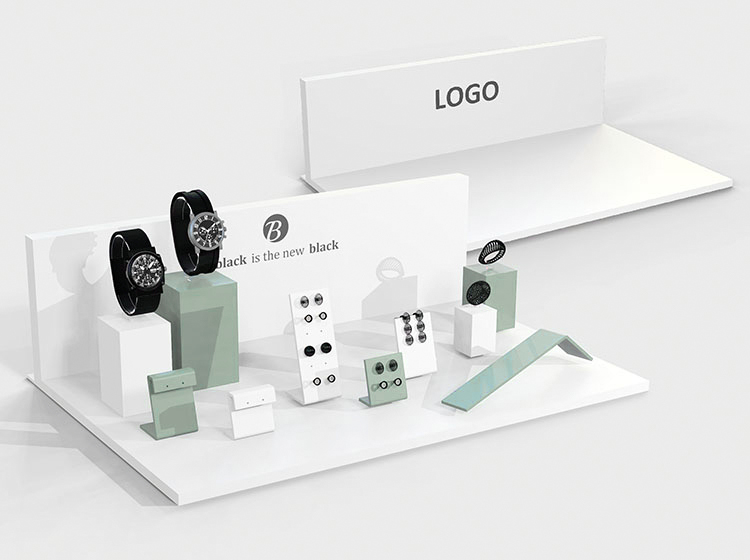

Two piece window display consisting of base and back board, to be assembled
500 x 340 x 150 mm


Two piece window display consisting of base panel and back board with picture holder, to be assembled,
300 x 340 x 350 mm
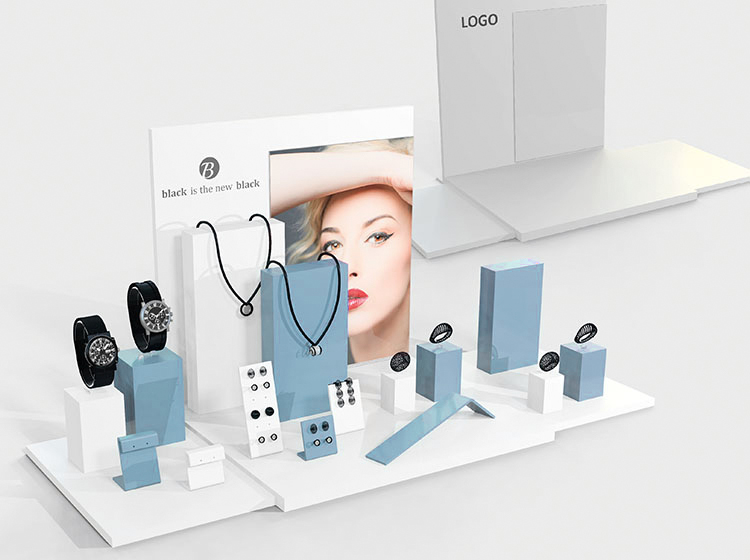
Four piece window display consisting of base panel and back board with picture holder, two fully moveable side panels, as well as decorative elements (180 x 260mm).
360 x 340 x 350 mm
Please contact our service team regarding minimum quantities, colour variants and other questions. We are happy to advise you!
Individual display solutions for different industries
For the most part, we produce our displays individually, exactly according to the wishes, needs and specifications of our customers. We serve all industries and, thanks to our modern machine park, can meet almost every customer request. The design of the display solutions can be carried out on your own or optionally via our design agency Tablo GmbH.

Acrylic display
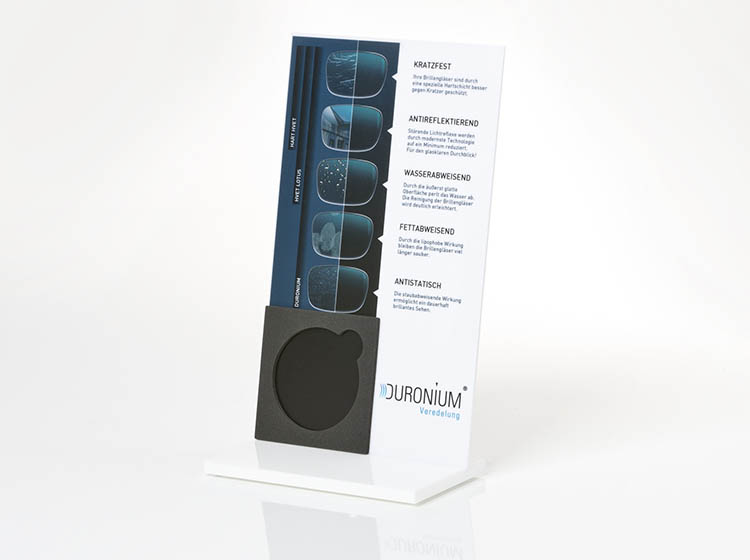
Plastic display
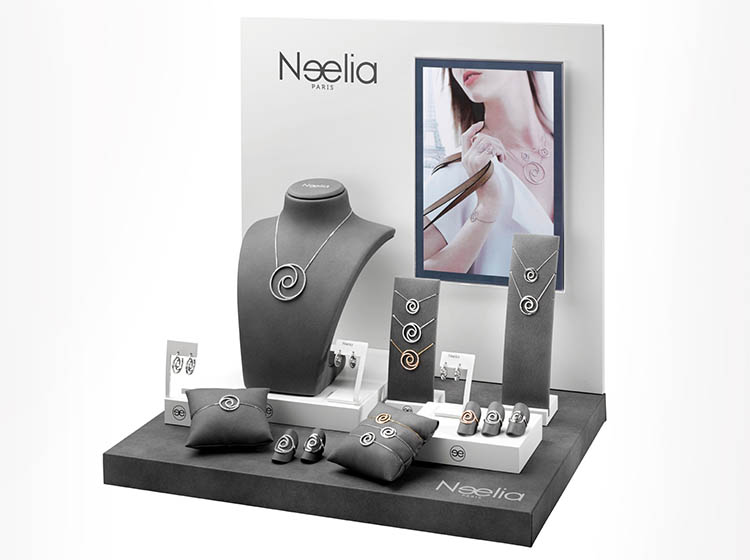
Jewellery display
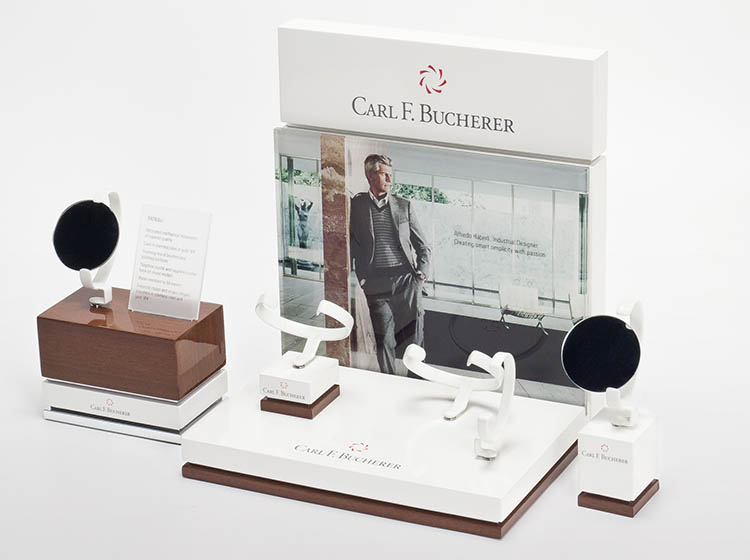
Watch display
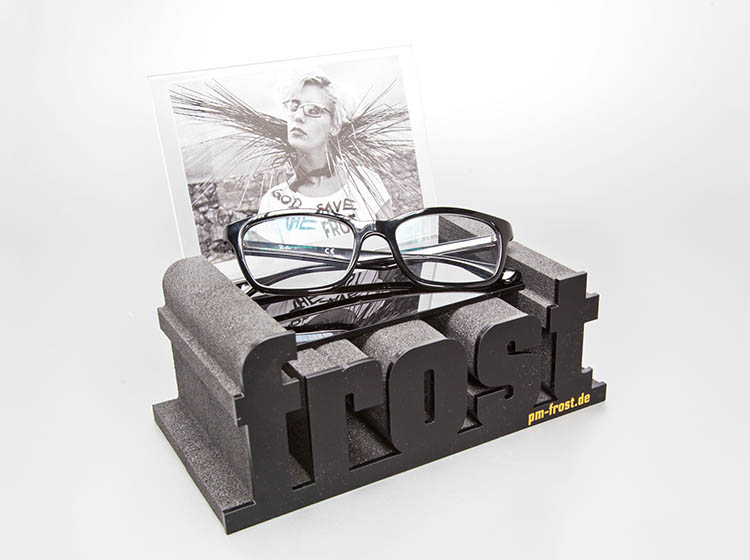
Spectacles display
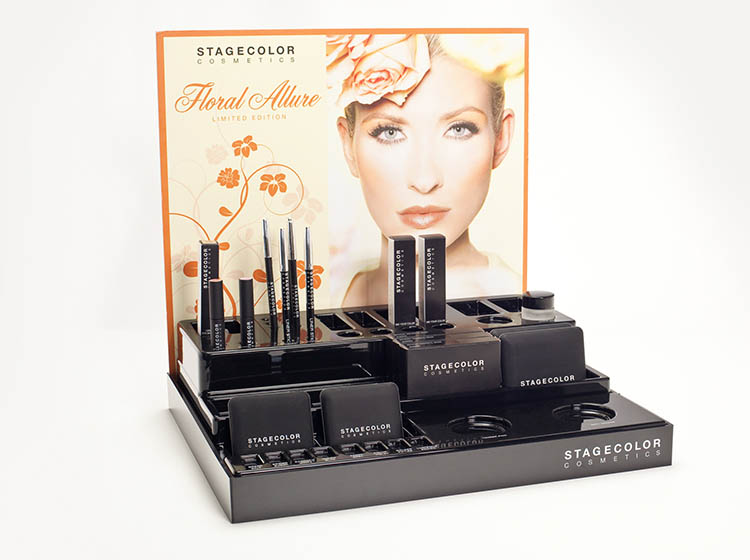
Cosmetics display
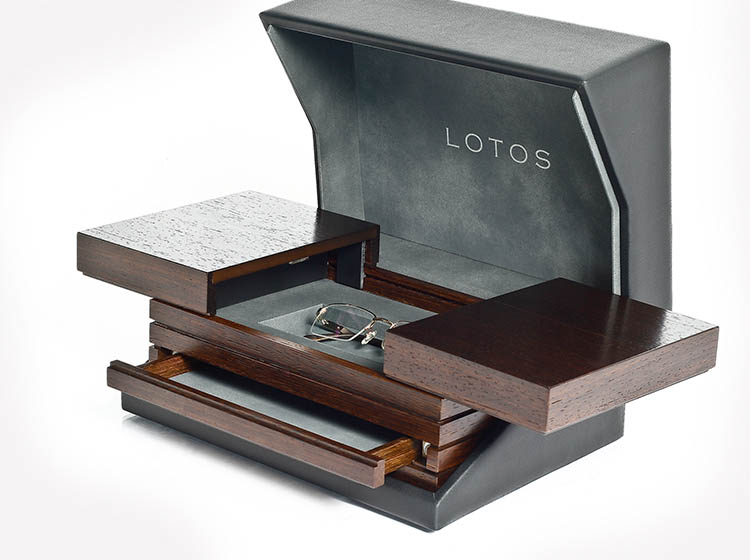
Wooden display
FAQ – Frequently Asked Questions about Displays
A POS display (point-of-sale display) showcases products directly at the point of sale, combining product presentation with brand communication and sales promotion. As a manufacturer of POS displays, Kling develops solutions that are individually tailored to the product, brand and location – from product placement and display height to stability, load-bearing capacity and ease of product retrieval.
Depending on the product and location, POS displays can take the form of floor-standing, freestanding, tabletop, countertop, wall-mounted or shop window displays. Product-specific solutions, such as displays for jewellery, watches and spectacles, are also available. The most suitable solution depends, amongst other things, on the product’s size, weight, quantity, available space and the desired display height. Kling can assist you with the selection and development process.
A bespoke display is suitable when a product, brand or location places specific demands on dimensions, shape, materials, product holders or functions. A standard display is based on a tried-and-tested standard design and can be customised, for example, with colours, logos, prints or inserts. This is often the more cost-effective solution.
The materials Kling processes include wood, acrylic glass, plastics, metal and corrugated cardboard. Combinations of materials are also possible – for example, a sturdy wooden base with transparent acrylic glass elements. The choice depends on the product’s weight, the loads it will bear, its appearance, service life, quantity, as well as transport and assembly – and, of course, it is essential to achieve a distinctive look that catches the eye.
Yes. Wood, for example, can provide stability, whilst acrylic glass is used for transparent or visually lightweight elements. As the materials expand and withstand stress differently, we select suitable manufacturing processes, such as bonding or joining techniques. Where necessary, we incorporate concealed mechanical fastenings to ensure that the joint remains reliable even in series production.
Yes. Logos, renderings, CAD data, product drawings and corporate design guidelines can be incorporated into the development process. Prior to production, we check, amongst other things, material thicknesses, product dimensions, bonding and assembly surfaces, as well as the feasibility of incorporating logos and printed motifs.
The following information is particularly helpful for an initial assessment:
• Product dimensions and weight
• Product samples, drawings or 3D data
• Location of use and available space
• Desired quantity
• Materials and finishes
• Corporate design guidelines
• Transport and assembly requirements
You can submit an enquiry directly via our contact form.
Yes. For bespoke display projects, Kling first creates a digital rendering and – depending on the project and the required approval process – a near-production prototype using the intended materials and finishes. This allows the design, fit, stability, product retrieval, material appearance and joining techniques to be tested even before series production begins.
At the same time, Kling takes manufacturing tolerances, drill holes, milled recesses, bonding surfaces and connection points into account right from the start of the design process. Solutions that are structurally complex or prone to errors are optimised for mass production. In this way, as a manufacturer, Kling ensures that bespoke displays can be produced in a functional, precisely fitting and consistently high-quality manner, even in larger quantities.
There is no general minimum order quantity. The economically viable quantity depends on the design, material, tooling requirements, finishing and assembly costs.
We therefore always assess the appropriate production quantity on a case-by-case basis, depending on the specific project.
The duration of the project depends on its complexity, product data, coordination, prototyping and production volume. Once the requirements have been assessed, Kling draws up a bespoke schedule for development, approval and manufacture. Interchangeable graphics, inserts or mountings can be incorporated into the design at the drafting stage to allow for future product changes.
Kling takes sustainability into account right from the design and development stage of a display. In addition to the choice of materials, the key factors are, above all, ensuring the longest possible service life and the ability to adapt the display at a later date or to separate the materials.
Thanks to interchangeable product holders, replaceable inserts or adjustable brackets, Kling displays can be used for different products or collections. Product sizes, weights and shapes are taken into account right from the development stage. This means that a basic display can be used over a long period and adapted to changing product ranges.
Discover our products






Catalogues and brochures for download
In our media area you will find the latest catalogues, brochures, flyers and videos. Here you get a detailed insight into the diversity of our product portfolio and can also see successfully completed customer projects and references.