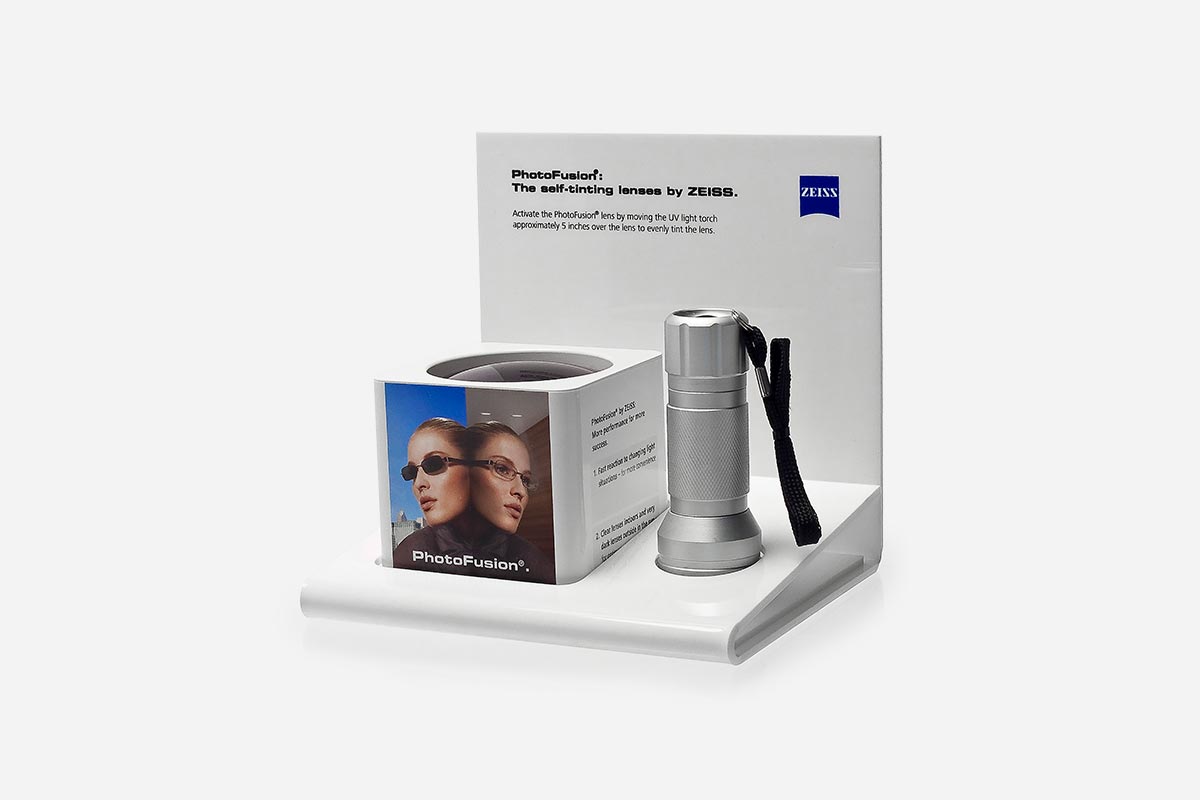
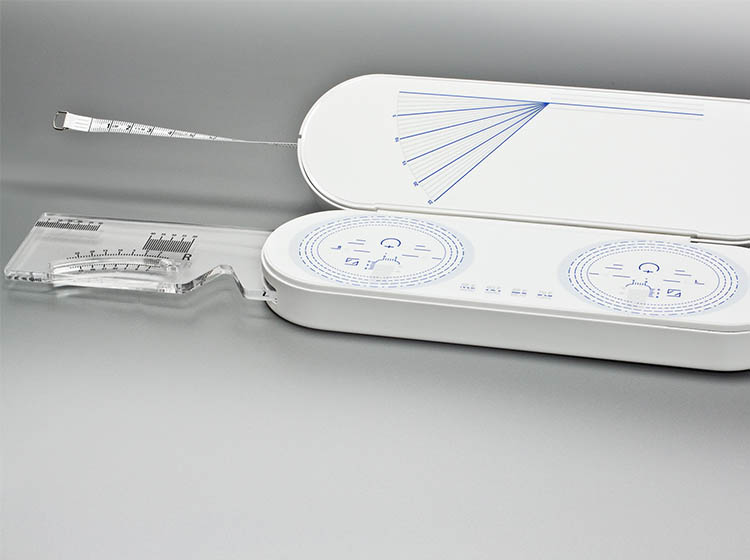
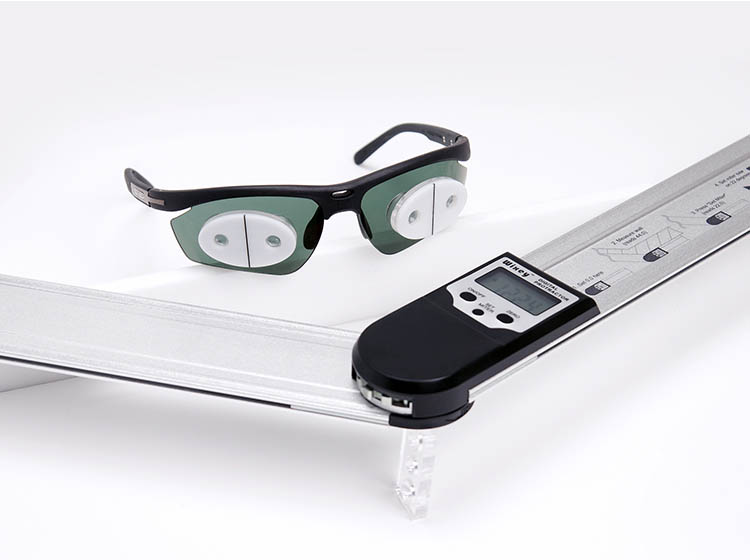
Thanks to decades of working with customers from the optics industry, we know their needs down to the smallest detail. Aside from the pure product presentation of glasses, spectacles and frames, we have special know-how in the development of demo tools for optical devices. With the help of these demo tools, specific properties of glasses, for example anti-reflection, polarisation, self-toning and resilience of the glasses can be demonstrated at the point of sale.
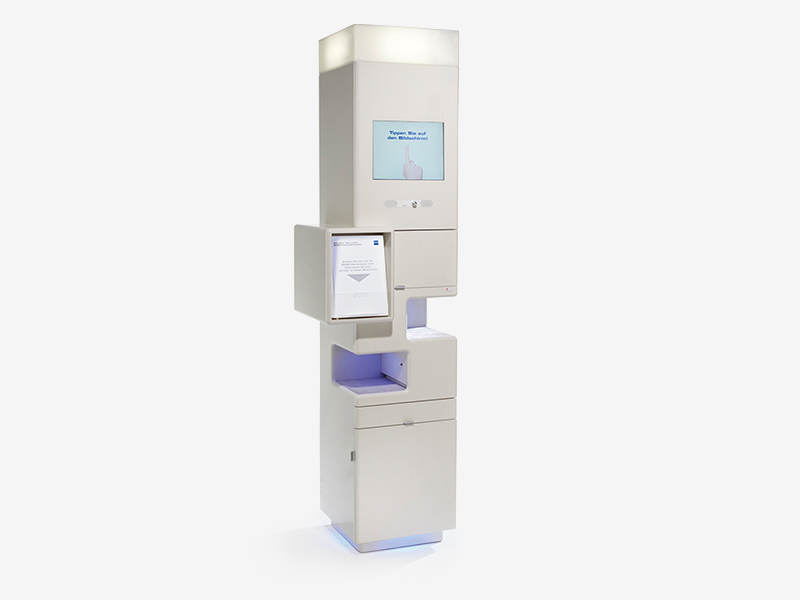
The possibilities for design of the optics tools are versatile – depending on the needs of our customers, we develop simple hand instruments as well as elaborate demo tools with integrated technology to mount on counters and sales counters. Our competent personnel will gladly consult you on the technical possibilities for the implementation of your ideas and requirements – just get in touch with us!
Individually developed demotools
Due to the complexity of the optician and demo tools, we manufacture these products exclusively individually, exactly according to the wishes and specifications of our customers.
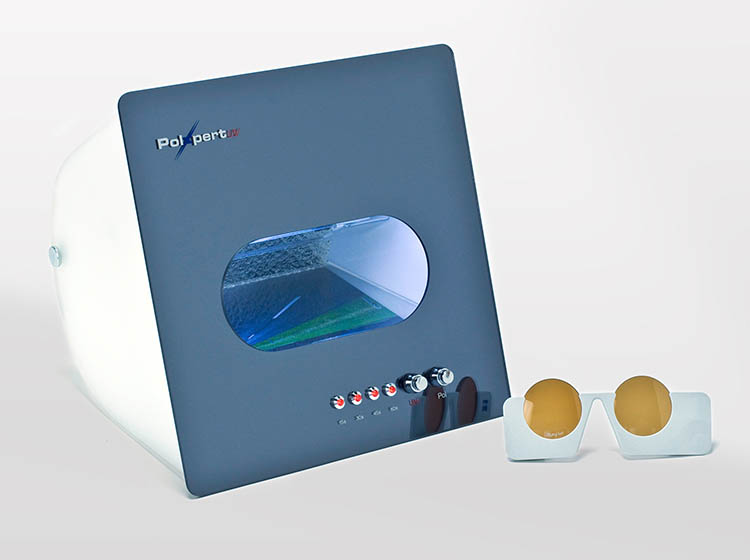
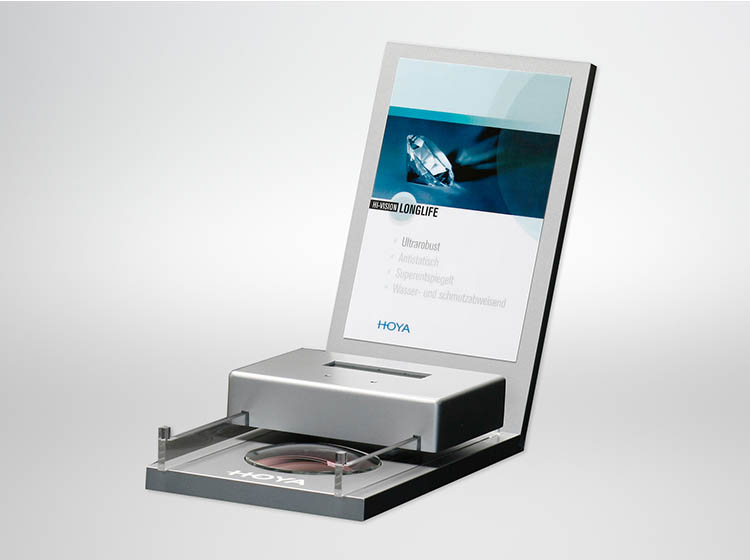

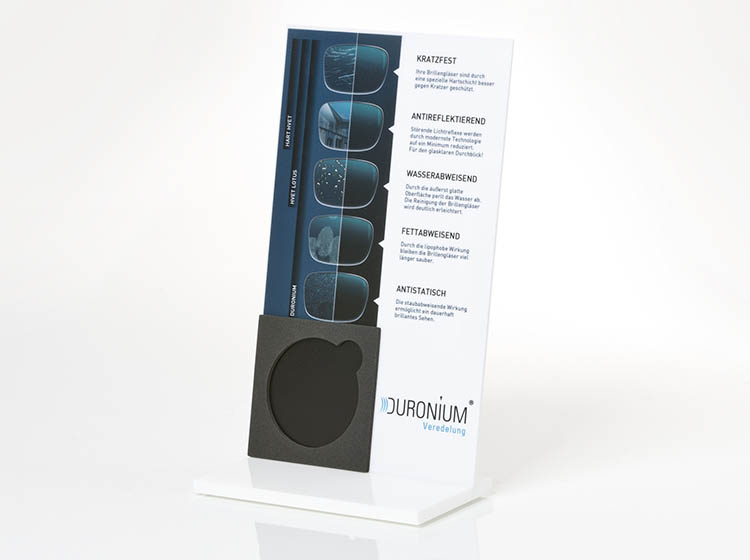
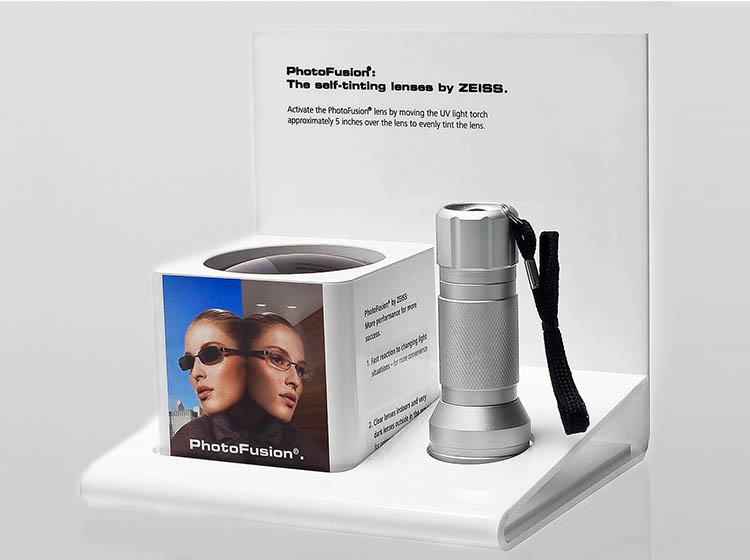

Please contact our service team if you have any questions about demo tools. We are happy to advise you!
FAQ – Frequently Asked Questions about Demotools
A demo tool (or demonstration display) makes the technical features of a product visible and understandable at the point of sale during a product presentation. The focus is not only on the presentation itself, but also on the clear demonstration of a specific effect or application feature. In the case of optical tools, these might include, for example, anti-reflective coating, polarisation, photochromic properties or durability.
Kling is the right manufacturing partner for this type of technical display. We are pleased to hear from you by tel. +49 (0) 7231 4888-0 or via our contact form.
The first step is to identify which product feature the customer wishes to demonstrate. Building on this, we develop the operating principle, the product mount, the housing and the user interface.
In doing so, the demonstration, the technology and the design must work together in such a way that the desired effect is quickly and clearly recognisable at the point of sale.
At Kling, demonstration tools are developed exclusively on a bespoke basis, as products, demonstration principles and technical requirements vary. Existing product samples, components or the customer’s technical specifications must also be taken into account in the design process and with regard to the appropriate manufacturing processes.
The result is not a generic sales aid, but a tool for the optical industry designed for a specific application.
The technical design depends on the desired demonstration effect. Depending on the project, the lighting, mechanics, electronics, product mounting and housing must be precisely coordinated.
At the same time, we ensure that technical components are housed in a protected manner whilst remaining accessible for installation or maintenance.
A demonstration tool must be quick to understand and easy to use during a consultation. It should be possible to position products or comparison elements clearly without the need for lengthy preparation. Furthermore, at Kling, we take into account durability, frequent use, ease of cleaning and a user interface that is as self-explanatory as possible.
Kling develops compact hand-held instruments as well as larger demonstration tools with integrated technology. These can be used on the move or placed permanently on a sales counter or consultation desk. The design is determined by the demonstration function, the available space and the desired flow of the customer consultation.
Kling primarily acts as a manufacturing partner for industrial companies that have already developed their own demonstration tools and tested their functionality. In such cases, Kling carries out series production in accordance with the customer’s specifications.
Alternatively, thanks to its diverse manufacturing processes, Kling is also able to act as a development and manufacturing partner for small and medium-sized enterprises, helping to develop product innovations or new designs to a certain extent, before proceeding to mass production whilst ensuring compliance with safety regulations as well as REACH and RoHS standards.
Enquiries can be submitted directly via our contact form.
Yes. Materials, shape, colours, logos and lettering can be tailored to the corporate identity. Technical components can also be integrated into the display housing in such a way as to create a cohesive and brand-consistent overall appearance. This means that the demo tool serves both as a technical sales aid and as a brand ambassador at the point of sale.
Due to the complex design and manufacturing process, Kling can produce bespoke demonstration tools in batches of at least 100 units. A lead time of approximately 6–9 months should be allowed for development, fine-tuning and production.
Before series production begins, the solution developed is tested using a prototype. The focus here is not only on design and workmanship, but particularly on the demonstration effect, usability and the interaction between the technical components. Only once functionality and handling have been fine-tuned is the demonstration tool prepared for the planned production run. A wide range of manufacturing processes is available at Kling for this purpose.
Yes. A demo tool can form part of a wider POS concept and can, for example, be combined with eyewear displays, sales counters or a shop-in-shop system.
This allows product presentation, customer advice and product demonstrations to be coordinated in a cohesive design.
To provide an initial assessment, we primarily need information on the desired demonstration function, the product, the location of use and the planned quantity.
Product samples, technical components or data, details of the operating procedure and corporate design guidelines are also helpful. The documents can be submitted via our contact form.
Discover our products



Catalogues and brochures for download
In our media area you will find the latest catalogues, brochures, flyers and videos. Here you get a detailed insight into the diversity of our product portfolio and can also see successfully completed customer projects and references.